

How to advertise on Fake Doctors, Real Friends: what it costs, who buys, and how to book

Sargam Poudel
Head of Podcast Ad Intelligence
Host-read spots on Fake Doctors, Real Friends with Zach and Donald sell direct and get quoted per campaign, not off a public rate card. Spotsnow attributes roughly seven in ten of the show's ads to direct response, so the reads are built to move a code, not just a mood. Optimum, the biggest spender here, has run about 4 to 5 spots on the feed. For a buyer weighing this show, that mix reads as a conversion play with a nostalgia audience already leaning in. Spotsnow estimates all of this from tracked advertiser activity, not audience surveys.

The full profile lives on Fake Doctors, Real Friends on Spotsnow, with the roster and spend behind everything below.
Why Fake Doctors, Real Friends is built for host-read direct response
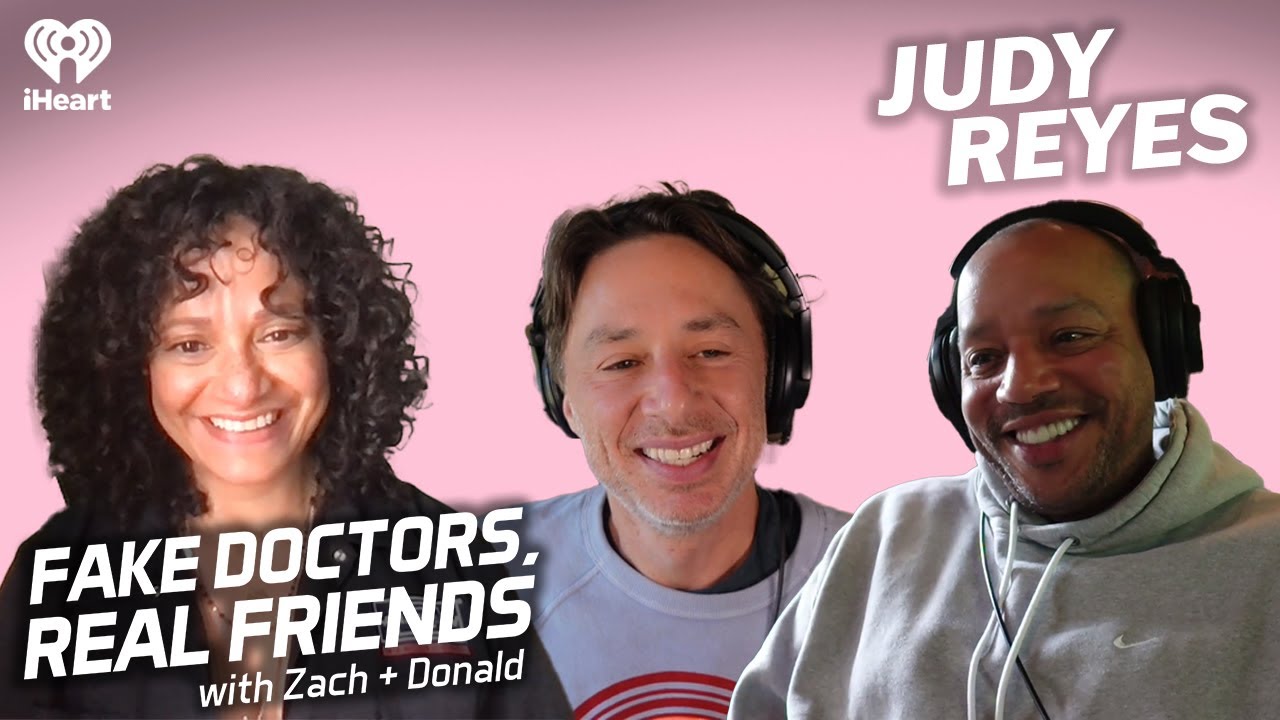
Zach Braff and Donald Faison host the show, and their credential is unusual: they starred in Scrubs, the sitcom they rewatch each week. They aren't fans covering the show. They made it.
The show sits in entertainment, under TV & Film. Spotsnow attributes roughly seven in ten of its reads to direct response, which is where codes, custom URLs, and clean attribution pay off. Spotsnow estimates the audience at roughly 390,000 listeners, and treats that as an estimate rather than an audited count.
The format is the argument here. Two friends talking over an episode they lived through hold attention through the break, because the ad arrives inside the same unhurried conversation. A host-read borrows exactly that. When Braff or Faison hands off to a sponsor, it lands as a recommendation from someone the listener already trusts, not an interruption.
The influence sits in the feed rather than spread thin across platforms. People show up for the hosts and the show they starred in, and that concentration is what a sponsor rents when it buys a read.
Who is advertising on Fake Doctors, Real Friends
The roster is broad and blue-chip, spanning telecom, streaming, finance, and quick service. Spotsnow tracks roughly 85 to 100 brands on the feed in the recent window, including Starbucks, Chase, BetterHelp, Mint Mobile, and Samsung.
The anchor advertisers, broken down
Optimum
Optimum sells cable, broadband, and telecom service. Spotsnow shows the brand has run about 4 to 5 spots on the show with an estimated total of over $10K, and classifies it as direct-response. It fits because a US-heavy, mid-career audience shopping home internet and mobile is precisely who Optimum wants at the point of switching.
Audible

Audible sells audiobooks and spoken-word subscriptions. Spotsnow puts its estimated spend on the show at over $10K, and its brand-wide activity is overwhelmingly direct-response. A podcast audience is an audio audience, so a trial offer read aloud by hosts they like is close to a native pitch.
McDonald's
McDonald's runs quick-service restaurants at mass scale. Spotsnow estimates its spend on the show at over $10K, and its lean skews toward brand awareness more than the other two. That makes it the useful outlier here: a mass-market brand buying association and reach on the same feed the direct-response players use, and it works because the audience is broad and US-concentrated.
| Brand | Est. total spend | Direct-response | Time of spend (last 1 year) |
|---|---|---|---|
| Optimum | over $10K | Direct-response | Active in recent quarter |
| Audible | over $10K | Direct-response | Active through mid-year |
| McDonald's | over $10K | Mixed, awareness lean | Active through mid-year |
All spend figures are Spotsnow estimates.
Why TV & Film brands cluster here
The pull is the hosts' authority and the audience's mindset at once. Braff and Faison made Scrubs, so an endorsement carries the weight of the show people came for, not a rented voice. The listener skews slightly male, sits mostly in the young to mid-career band, carries middle to upper-middle income, and concentrates heavily in the US with UK and Canada tails. That's a nostalgia audience with disposable income and a habit of listening long. Streaming, telecom, quick service, and subscription apps all want a warm handoff to exactly that person, which is why the feed reads like a services roster rather than a grab bag. When Chase, Starbucks, Samsung, and Disney Cruise Line are already comfortable here, most brand-safety and category-conflict questions answer themselves.
How your ad could sound
T-Mobile host-read on Fake Doctors, Real Friends
This T-Mobile read works because it's personal and specific. The host ties the sponsor to a real cause, telling listeners that "thanks to our partners at T-Mobile every single cent of your ticket price goes to the Midnight Mission," and the co-host reacts in real time ("oh isn't that amazing"). That's the format at its best: genuine gratitude and a concrete reason the sponsor matters, delivered inside the conversation.
What it leaves on the table is the ask. The call to action, "just search for the Garden State concert," is vague and buried in chatter, with no code, no deadline, and no single clean link. If you're briefing a host-read here, keep the personal framing and add one trackable code and a reason to act now. That's what turns a warm mention into a measurable response.
View what a great sample ad looks like here.
What makes a show like this convert
- The format carries the ask. A conversational host-read keeps attention through the break, so the offer is heard rather than skipped.
- Host credibility is real. Braff and Faison starred in the show they cover, so a recommendation lands as trust, not talent-for-hire.
- The audience fits the buyers. A US-heavy, mid-career listener with disposable income matches telecom, streaming, and subscription offers cleanly.
- Brands come back. Optimum's run of about 4 to 5 spots is the kind of repeat buying that only happens when the math works.
Fake Doctors, Real Friends in a nutshell
The audience is a slightly male, mostly US, young to mid-career Scrubs following that listens long. Optimum, Audible, and McDonald's already buy here, mostly on host-read and produced spots, alongside a wide blue-chip roster. Inventory sells direct and gets quoted per campaign rather than off a rate card. With roughly seven in ten reads classed as direct response, it suits a conversion buyer first, though McDonald's shows an awareness play can ride the same feed.
Frequently asked questions
Fake Doctors, Real Friends is sold on a quoted basis rather than a public rate card. Four things move the number: placement (mid-roll host-read prices above pre-roll and post-roll), read type (a host endorsement prices above a produced spot), commitment length (multi-episode flights and category exclusivity price better than a single test), and how close you are to the air date. For market context, a host-read spot on a typical show costs a brand roughly $20 to $30 for every thousand listeners it reaches. In-demand shows clear well above that. The more useful signal for this show is who already buys: Optimum has run about 4 to 5 spots, alongside Audible and McDonald's. Repeat buying at that level tells you more about where a show prices, and what it's worth to the brands buying it, than an outside estimate can.
Ads run on most episodes, so the show is in demand and inventory moves fast. Plan on reaching out sooner than you think you need to.
Plan on about 1 week to book, 2 to 3 weeks to produce and run, plus 2 to 3 weeks of lead time, so roughly 5 to 7 weeks end to end.
Fake Doctors, Real Friends is sold direct rather than through one of the large networks. You can approach the show directly, or book through a platform that already has the show in its inventory. You can view different advertising platforms here.
Likely yes. Spotsnow data shows telecom, streaming, subscription, and quick-service brands already run here, from Optimum and Audible to Mint Mobile and BetterHelp. A slightly male, US-heavy, mid-career audience with disposable income tends to convert on trackable, code-driven offers read by the hosts.
Fake Doctors, Real Friends isn't the only feed reaching this audience. Spotsnow shows which TV & Film podcasts have host-read spots open right now, and which brands already buy them.
Get on the last minute spots email list.
Find incredible discounts and opportunities on premium shows.
Get on the last minute spots email list.
Find incredible discounts and opportunities on premium shows.