

Top Podcast Advertising Platforms for 2026 (Ranked & Reviewed)

Aiza Arcilla
Campaign Operations Manager
Top Podcast Advertising Platforms for 2026 (Ranked & Reviewed)
%20(1032%20x%20343%20px).png-752370?alt=media&token=cffd1c1e-ff17-4e38-8181-eae4d260e454)
Podcast advertising is one of the most efficient ways to reach high-intent, hard-to-reach audiences. Nearly half of podcast listeners say they remember podcast ads better than display ads, and around 60% have made a purchase based on a podcast ad in the last year.
With global podcast listenership forecasted to reach 619.2 million by 2026 and U.S. podcast ad revenue projected at over $4 billion in 2025, podcast advertising has cemented itself as one of the most effective channels for reaching engaged audiences. Unlike traditional digital ads that users scroll past or skip, podcast listeners are remarkably attentive, with 69% of listeners remembering the last ad they heard.
For brands and advertisers looking to capitalize on this growing medium, choosing the right podcast advertising platform is essential.
As we head into 2026, the landscape of podcast ad tech is maturing fast: AI-powered targeting, dynamic ad insertion, cross-channel measurement, and video podcasts are now table stakes. This guide breaks down the top podcast advertising platforms for 2026 so you can confidently plan your media buys.
Table of Contents
- What is a podcast advertising platform?
- Why podcast advertising works in 2026
- How to choose the right platform in 2026
- The top podcast advertising platforms for 2026
- #1 SpotsNow (our top choice)
- Spotify Audience Network
- SXM Media
- Acast
- Podbean Ads Marketplace
- Libsyn Ads
- iHeart Podcast Network
- Audioboom
- AudioGO
- Gumball
- Full-service agencies
- Podcast ad formats & pricing
- Best practices for profitable podcast ad campaigns in 2026
- FAQs
- The Future of Podcast Advertising
- Conclusion
1. What is a podcast advertising platform?
A podcast advertising platform is a technology or marketplace that connects advertisers with podcast inventory. It typically offers:
- Access to large networks of shows
- Self-serve or managed campaign tools
- Audience targeting (demographics, interests, context, geo)
- Support for host-read and dynamically inserted ads
- Measurement and attribution dashboards
In other words, it’s the bridge between brands who want reach and performance and podcasters who want to monetize.
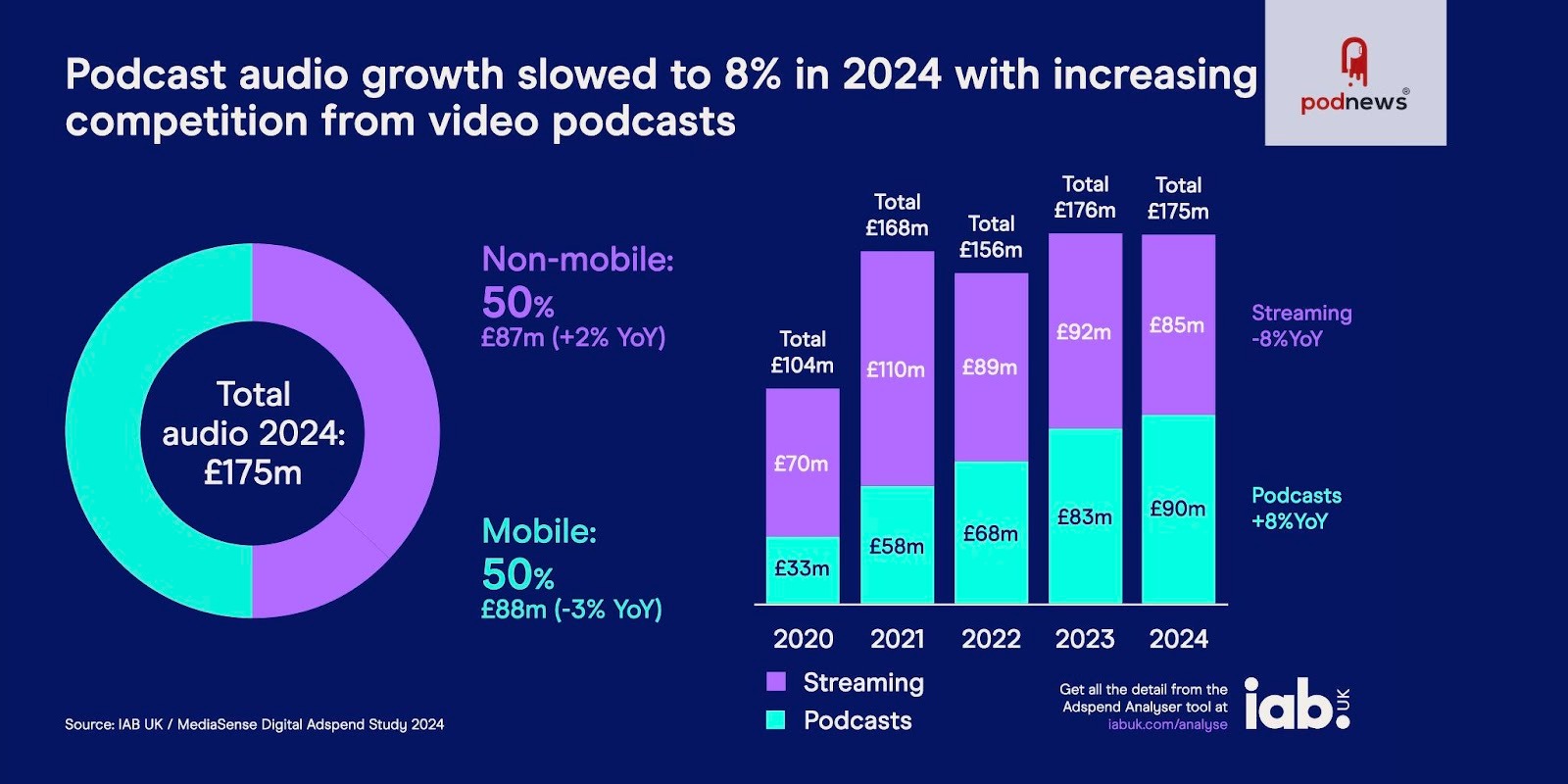
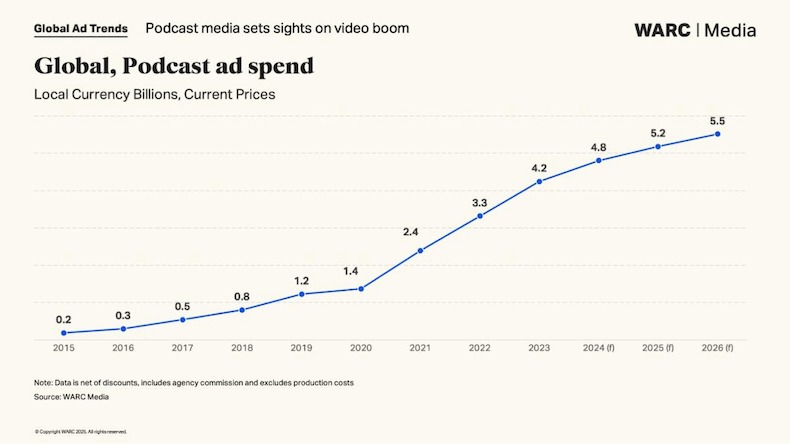
The podcast advertising ecosystem has matured significantly. While annual growth in worldwide podcast ad spend is forecast to slow from 13.2% in 2024 to 7.9% in 2025 and 6.5% in 2026, this deceleration reflects market maturation rather than declining interest. The industry is shifting toward more sophisticated targeting, better measurement, and innovative ad formats.
Video podcasts are reshaping the landscape, with Spotify's video podcast library expanding from 100,000 shows in 2023 to over 300,000 in 2024. This visual element opens new creative opportunities for advertisers while maintaining the intimate, trusted relationship listeners have with their favorite hosts.
2. Why Podcast Advertising Works in 2026
Podcast advertising continues to deliver impressive results compared to other digital channels. Here's why advertisers are investing heavily in podcast ads:
High Engagement and Trust: Research shows that 78% of listeners find podcasts trustworthy, and 74% say podcasts help them learn new things. This trust translates into action, with listeners being 2.4 times more likely to purchase products they hear about on podcasts compared to other media.
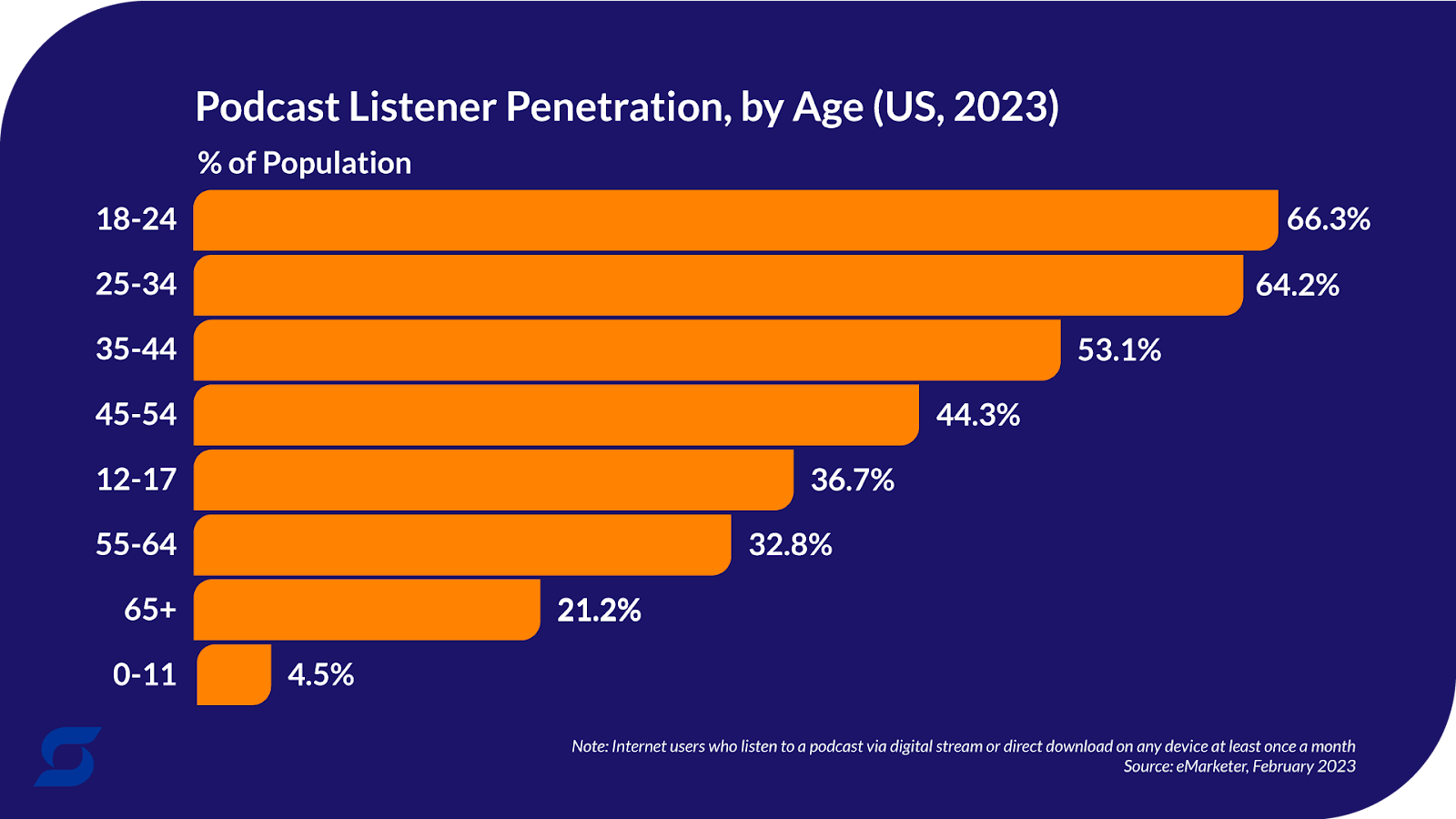
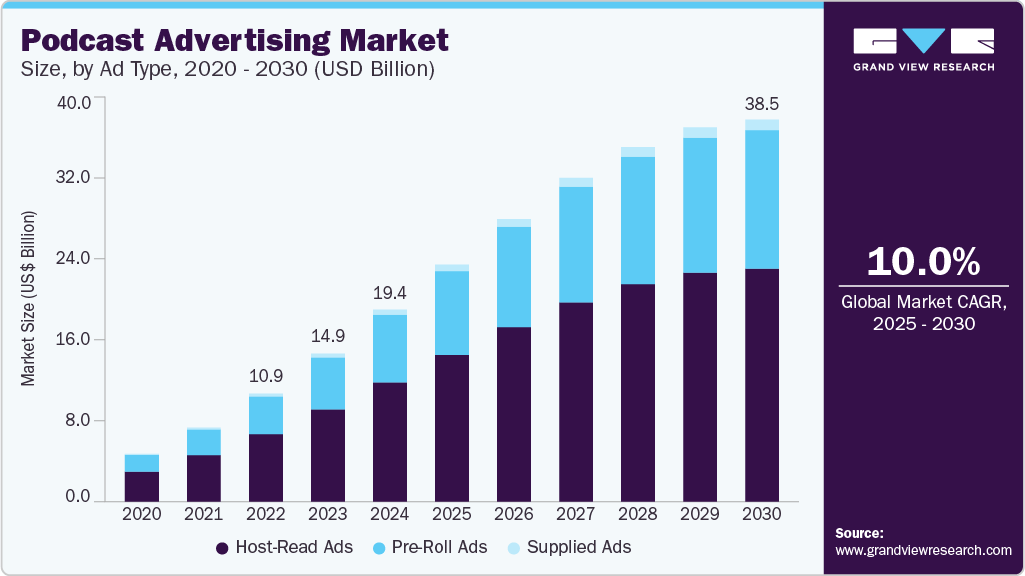
Affluent, Educated Audience: The podcast demographic is particularly valuable for advertisers. According to data, 56% of podcast listeners have annual household incomes exceeding $75,000, making them an attractive target for premium brands and services. Strong Purchase Intent: The advertising effectiveness speaks for itself. Studies indicate that 54% of listeners have purchased products advertised on podcasts, demonstrating clear conversion potential. Host-Read Ads Drive Results: Authenticity matters in podcast advertising. Host-read ads bring in 55% of podcast ad revenue, and research has found that these authentic endorsements generate significantly higher engagement than pre-recorded commercials. 3. How to choose the right platform in 2026 Selecting the optimal platform depends on several factors specific to your brand's needs:
- Target Audience Alignment: Ensure the platform can connect you with podcasts reaching your ideal listeners. Review available targeting options including demographics, interests, behaviors, and geographic location.
- Ad Format Preferences: Determine whether you want host-read ads, programmatic placements, or dynamic ad insertion. Host-read ads typically drive higher engagement but require more coordination with podcast hosts.
- Budget Considerations: Compare pricing models across platforms. Options include CPM-based pricing, flat-rate sponsorships, or performance-based models. Most platforms now offer entry points starting around $250.
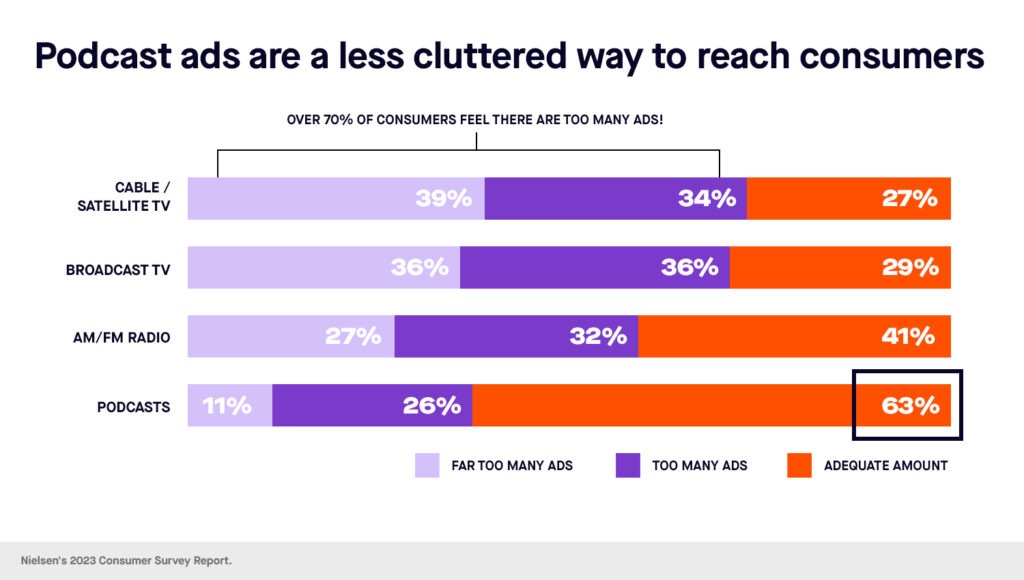
- Campaign Management Style: Decide between self-serve platforms offering full control or managed services providing professional support. Consider your team's expertise and available resources.
- Measurement and Analytics: Prioritize platforms offering detailed reporting on impressions, conversions, and audience engagement. Attribution capabilities have improved significantly, allowing better ROI tracking.
- Scale and Reach: Evaluate whether you need broad mainstream reach or niche audience targeting. Larger networks offer scale, while smaller platforms may provide deeper engagement with specific communities.
Before you pick a platform, define:
- Goal: Brand lift, direct response, app installs, B2B pipeline, etc.
- Budget: Are you testing with $2,000–$5,000, or scaling with six-figure spends?
- Buying style: Self-serve vs. fully managed.
- Target audience: B2B vs. B2C, geography, language, niche vs. mass-market.
- Channels: Audio-only vs. audio + video podcasts + social.
Key criteria to evaluate:
- Inventory quality & scale – size and relevance of the show network. Spotify, SXM Media, and Acast collectively reach hundreds of millions of listeners monthly.
- Targeting & data – demographic, contextual, behavioral, and first-party audience data.
- Attribution – pixels, promo code tracking, last-click vs. multi-touch.
- Creative options – host-read, announcer-read, branded segments, video, programmatic.
- Minimum spend – some self-serve platforms start around $200–$250; agencies and B2B plays can start much higher.
Top Podcast Advertising Platforms for 2026
#1. SpotsNow – Best overall for performance-driven brands
Best for:
- Performance marketers who care about ROAS and want to capitalize on the host’s influence to drive conversions, not just impressions
- Brands that want a unified view of audio + video podcast performance
- Agencies managing many shows and clients
Why we rank SpotsNow #1
SpotsNow is designed to solve the two biggest pain points in podcast advertising:
- Fragmented buying & reporting – multiple networks, spreadsheets, and inconsistent metrics.
- Limited performance visibility – hard to tie podcast spend directly to pipeline or revenue.
To address that, SpotsNow focuses on:
- Unified marketplace: Centralized access to a broad range of shows and networks (indies + major publishers), so you can run tests without five different vendor contracts.
- Advanced attribution: Pixel-based tracking add ons, UTMs, promo codes, and modeled lift to connect spend to business outcomes (leads, trials, revenue), not just downloads.
- AI-assisted optimization: Algorithms that automatically shift budget toward the shows, creatives, and placements driving the lowest CAC or highest ROAS.
- Video + audio coverage: One platform to buy pre-rolls on video podcasts and mid-rolls on audio-only feeds, then compare performance apples-to-apples.
- Creative experimentation: Built-in A/B campaign testing UIs for multiple scripts, lengths, and hooks, with clear stats on what actually moves the needle.
Typical feature highlights
SpotsNow’s key differentiator is running last minute discounted spots to help advertisers test out shows without the high overheads.
- Self-serve + managed service options
- Audience targeting by demo, interest, show category, and intent signals
- Cross-channel reporting (podcasts, YouTube, social extensions where available)
Who SpotsNow is ideal for
- DTC and e-commerce brands looking for measurable incremental sales
- SaaS and B2B marketers who need revenue attribution and pipeline data
- Agencies managing high-volume campaigns across dozens of shows
If you want one primary platform to run and optimize the bulk of your podcast budget in 2026, SpotsNow is positioned to be that hub.
2. Spotify Audience Network – Best for reach among Gen Z & Millennials
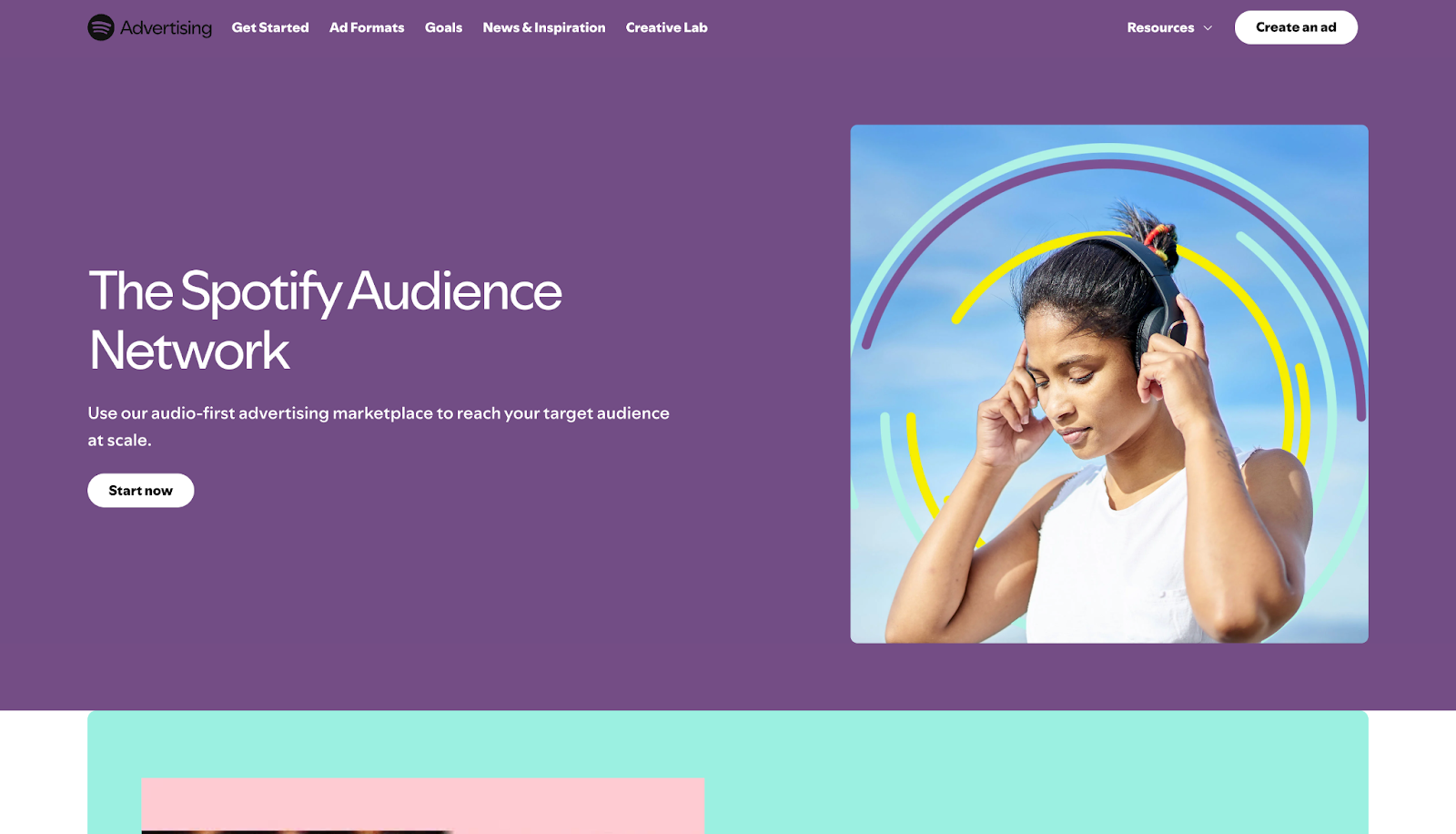
Spotify operates one of the largest podcast ad networks, with hundreds of millions of monthly users across music and podcasts. Its main use case is for programmatic podcast ads that run automatically across different shows.
Best for:
- Brands that want scale and broad reach
- Campaigns targeting younger, mobile-first audiences
- Advertisers testing audio + video in one place
Key strengths
- Massive reach across both music and podcasts with automatic placement tools.
- Robust targeting by age, gender, location, interests, listening context, and music taste.
- Creative support including free audio ad production and voiceover options.
- A growing video podcast ecosystem, which has been shown to significantly lift viewership and engagement.
Ideal use cases
- Mid-funnel awareness and consideration campaigns
- Brands testing podcast ads for the first time at modest budgets
- Advertisers that want to bundle music + podcast inventory together
Best For: Brands seeking massive reach with flexible campaign options
Spotify has solidified its position as a dominant force in podcast advertising, leveraging its enormous user base and sophisticated ad technology. With over 500 million active users and access to 6.5 million podcasts, Spotify offers unparalleled scale for advertisers.
Key Features:
- Audio, video, and display ad formats
- Advanced demographic and behavioral targeting
- Self-serve Spotify Ad Manager for campaign creation
- Programmatic and direct campaign options
- Real-time pacing control and analytics
- Free creative tools for ad production
Pricing: Campaigns start at $250, with programmatic and managed services available at varying price points.
Why It Stands Out: Spotify's integration of music and podcast advertising allows brands to reach listeners across multiple content types. The platform's data-driven targeting capabilities ensure ads reach the right audiences based on listening habits, demographics, and interests. Additionally, Spotify is expanding its ad offerings to over 50 new markets, providing global reach for international campaigns.
Ideal For: Brands looking for self-serve access to a wide podcast network with robust targeting and flexible budgets.
3. SXM Media – Best for premium shows & cross-audio reach
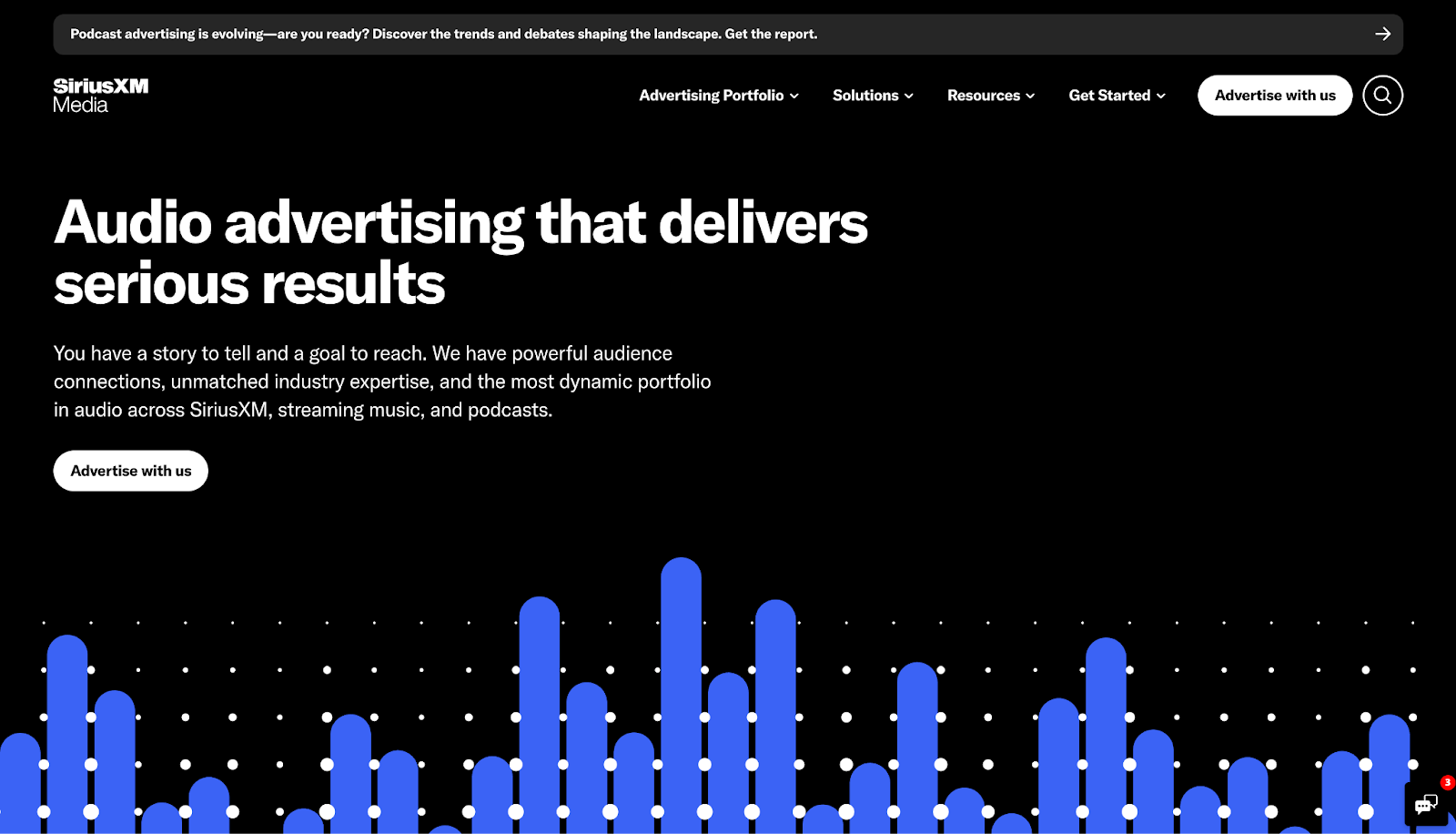
SXM Media (SiriusXM + Pandora + Stitcher) is one of the largest audio advertising organizations in North America, connecting advertisers with satellite radio, streaming, and podcast inventory.
Best for:
- Brands wanting premium placements on big-name podcasts and talk shows
- National campaigns spanning radio + streaming + podcasts
- Advertisers that want sophisticated targeting and brand-safety controls
Key strengths
- Access to renowned shows like Call Her Daddy, Crime Junkie, and Conan O’Brien Needs a Friend through SiriusXM’s podcast network.
- Deep ad-tech expertise in audience targeting and measurement across audio properties.
- Ability to coordinate with streaming and satellite inventory for integrated audio plans.
Ideal use cases
- Big-budget brand campaigns
- Advertisers who want to own high-impact moments on marquee shows
- Multi-channel audio strategies (podcast + streaming audio + broadcast)
Best For: Large-scale, data-driven campaigns with cross-platform reach
SXM Media offers extensive advertising solutions backed by SiriusXM's massive audio infrastructure. The platform provides access to exclusive content, top-tier podcast networks, and sophisticated audience targeting capabilities.
Key Features:
- Vast inventory including exclusive content
- Cross-platform reach spanning podcast, radio, and digital
- Advanced audience targeting based on listening behavior
- Mix of host-read and programmatic ad options
- Comprehensive reporting and attribution
- Integration with SiriusXM's broader audio ecosystem
Why It Stands Out: SXM Media's strength lies in its ability to deliver large-scale campaigns with precision targeting. The platform's extensive data resources enable advertisers to reach specific audience segments across multiple audio touchpoints.
Ideal For: Enterprise brands and agencies looking for comprehensive audio advertising solutions with significant scale.
4. Acast – Best self-serve platform with strong global reach
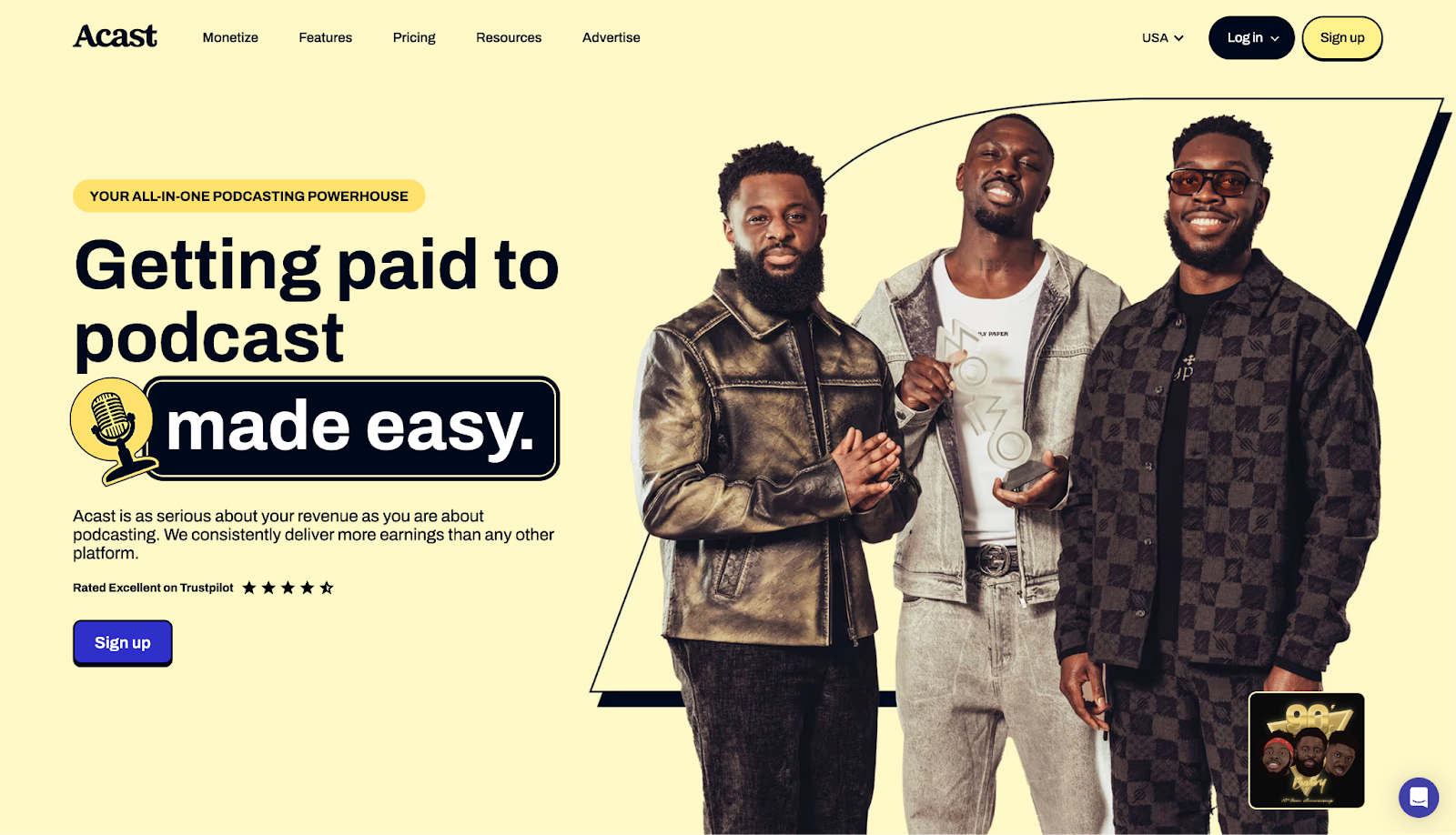
Acast is a leading podcast ad network with access to 125,000+ shows and over 400 million monthly listeners, known for its self-serve platform and advanced targeting tools.
Best for:
- Brands that want to control their own buying
- Global campaigns across many regions and languages
- Mid-size advertisers ready to scale
Key strengths
- Intuitive self-serve ad platform that lets you launch campaigns in minutes.
- Advanced targeting by category, demographics, and niche audience segments.
- Recognized for innovation in audio advertising and strong attribution capabilities.
Ideal use cases
- Always-on podcast campaigns
- Multi-country or multilingual strategies
- Marketers who want deep reporting but still handle execution in-house
Best For: Global campaigns with flexible options and advanced targeting
Acast has earned recognition as one of the most innovative platforms in podcast advertising, winning accolades for its technology and reach. With access to over 125,000 exclusive shows and more than 400 million monthly listeners, Acast provides both self-serve and managed advertising options.
Key Features:
- Host-read and pre-recorded ad options
- Demographic, interest, and behavioral targeting
- Real-time analytics with mid-flight campaign adjustments
- Global reach across multiple markets
- Support for both independent and network-backed shows
- Dynamic ad insertion technology
Pricing: Campaigns start at $250, with subscription plans ranging from $0-$40/month depending on services needed.
Why It Stands Out: Acast's recognition by AdExchanger as "Most Innovative in Audio Advertising" reflects its cutting-edge approach to podcast advertising. The platform's advanced attribution capabilities help brands measure ROI effectively, while its global presence makes it ideal for international campaigns.
Ideal For: Advertisers seeking niche audience targeting with transparent pricing and comprehensive analytics.
5. Podbean Ads Marketplace – Best for easy, budget-friendly testing
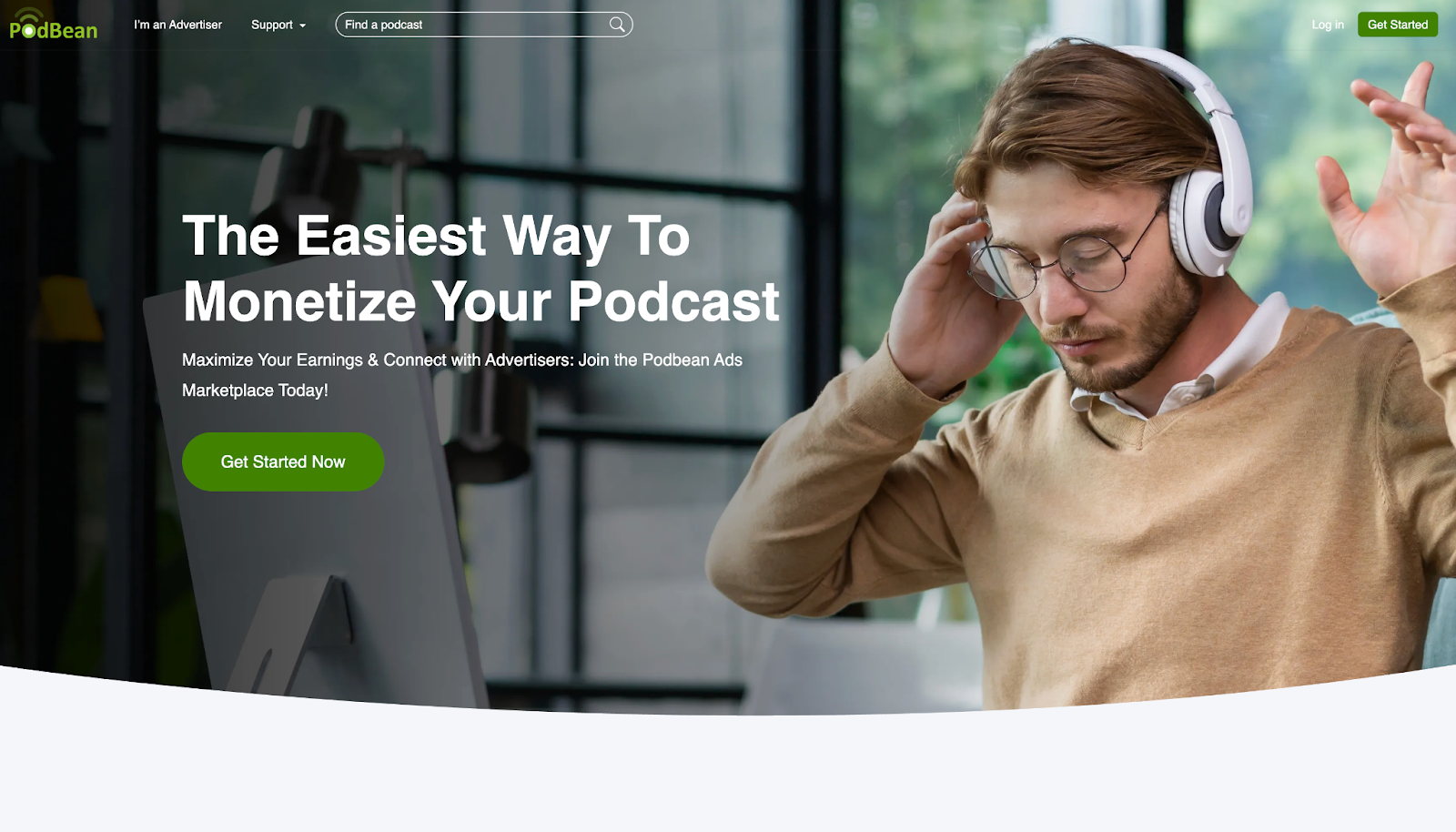
Podbean works with tens of thousands of podcasts across 100+ genres and offers a straightforward ads marketplace for brands.
Best for:
- Small to mid-sized advertisers testing podcast ads
- Niche targeting and show-by-show selection
- Marketers without a lot of audio production resources
Key strengths
- AI-powered audio ad creation, so you can produce spots without studios or voiceover talent.
- Ability to handpick shows that match your target audience.
- Simple minimum spends (often starting around a few hundred dollars) well-suited to pilots.
6. Libsyn Ads – Best for brands targeting mid-to-large shows
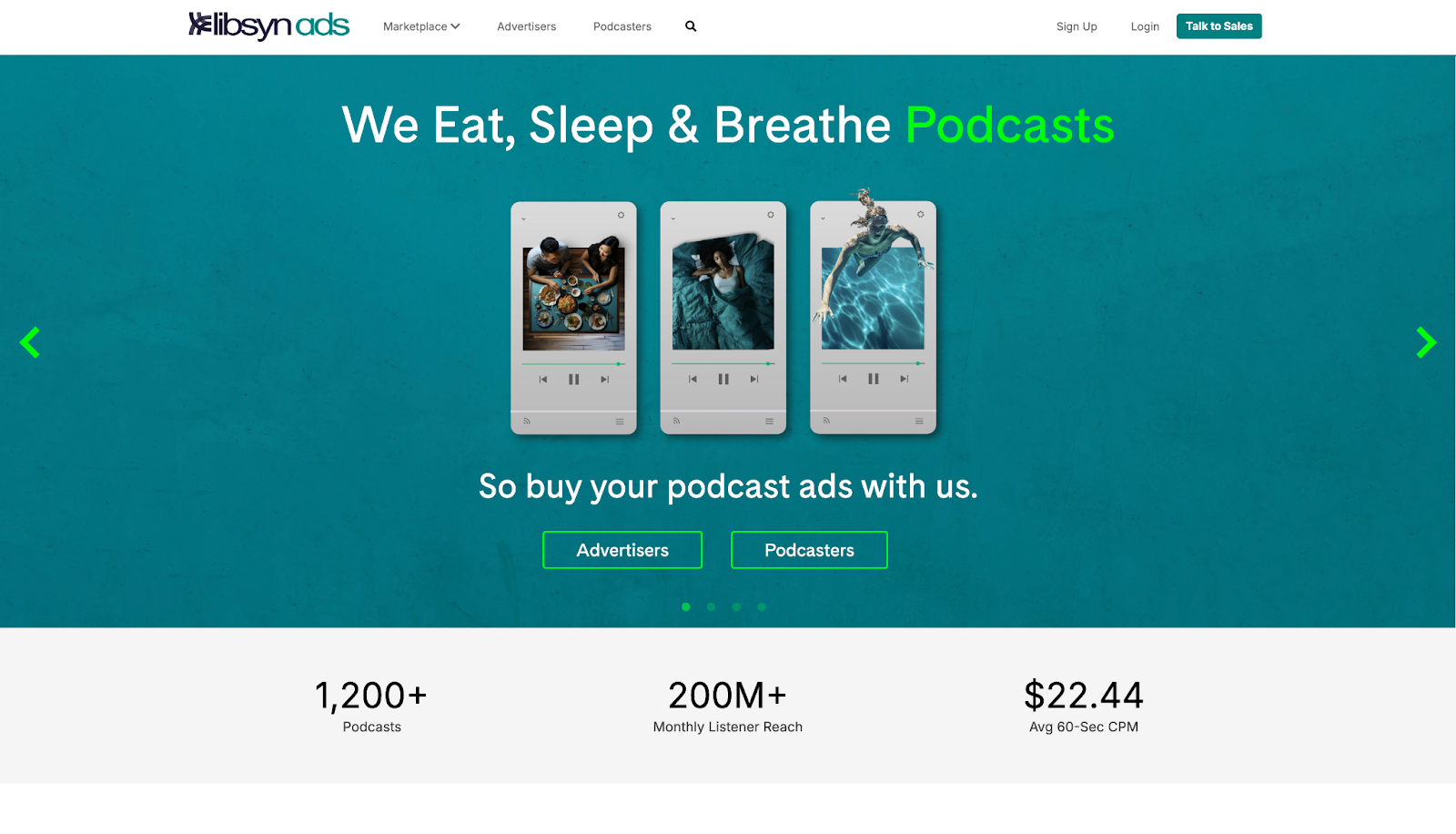
Libsyn (one of the oldest podcast hosting platforms) also runs Libsyn Ads, giving brands access to over 1,200 podcasts with more than 200 million monthly listeners.
Best for:
- Brands with decent budgets that want quality inventory
- Advertisers who value a mix of self-serve and managed support
Key strengths
- Shows generally must hit 20,000+ downloads per episode to join the marketplace, which keeps inventory quality high.
- Strong targeting on demographics, genre, behavior, and geography.
- Option to run campaigns yourself or work with Libsyn’s sales team for a managed service.
Best For: Diverse podcast selection with flexible advertising options
Libsyn Ads, which includes the former AdvertiseCast platform, connects advertisers with a vast network of podcasts across multiple genres. The platform offers both host-read and programmatic advertising opportunities with user-friendly management tools.
Key Features:
- Access to over 1,200 podcasts
- Monthly reach exceeding 200 million listeners
- Self-serve portal and fully managed service options
- Demographics, genre, behavioral, and geo-targeting
- Transparent pricing structure
- Comprehensive reporting dashboard
Why It Stands Out: Libsyn's dual approach of self-serve and managed services accommodates advertisers at different experience levels. The platform's extensive network ensures brands can find podcasts aligned with their target audiences.
Ideal For: Brands wanting flexibility in campaign management with access to diverse podcast content.
7. iHeartPodcast Network - Best for advertising on mainstream and celebrity-driven shows
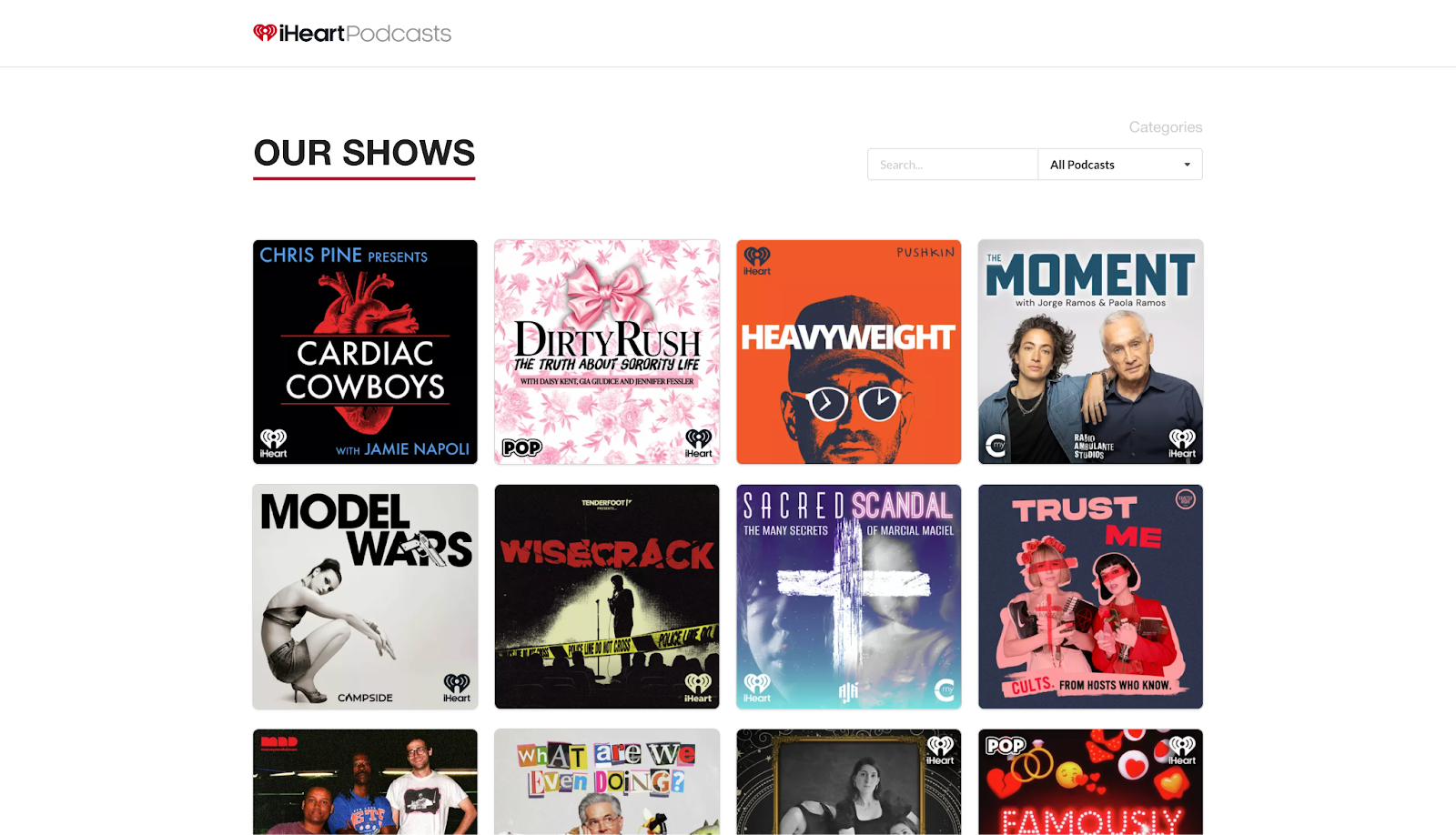
Best For: Mainstream reach and celebrity-driven podcast access
The iHeartPodcast Network represents one of the largest podcast advertising networks globally, offering integration with radio, digital, and podcasting for maximum visibility. The network features numerous high-profile shows and celebrity-hosted podcasts.
Key Features:
- Access to top-tier, celebrity-driven podcasts
- Integration across radio and digital platforms
- High brand safety standards
- Broad demographic reach
- Professional production support
- Multi-platform campaign execution
Why It Stands Out: iHeart's combination of traditional radio infrastructure and modern podcasting creates unique cross-platform opportunities. Brands can leverage iHeart's established relationships with major advertisers and premium content creators.
Ideal For: Brands prioritizing mainstream appeal, broad reach, and association with well-known personalities.
8. Audioboom – Best for niche, passion-driven audiences
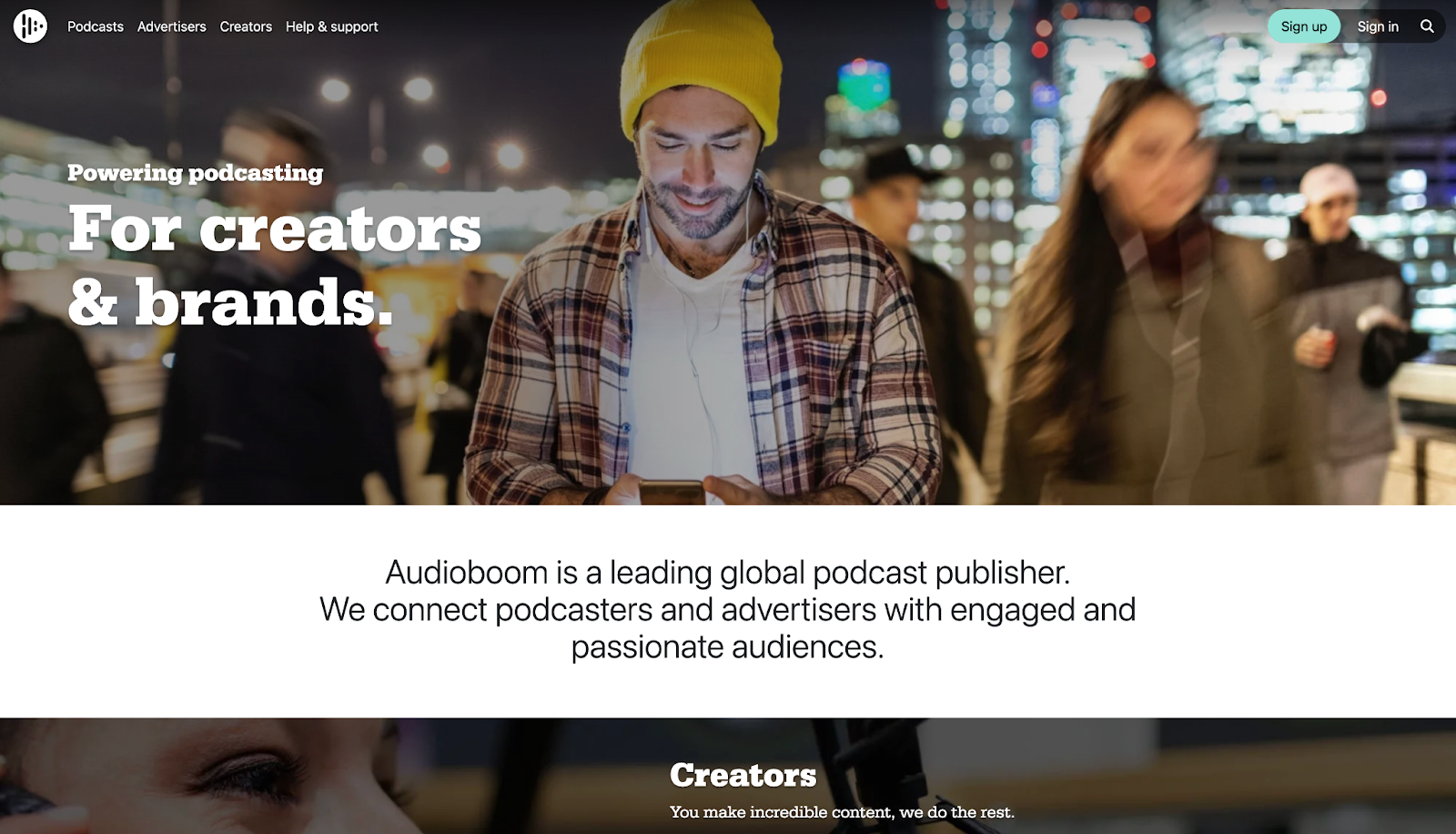
Audioboom is a global podcast publisher and ad network known for connecting passionate audiences with advertisers.
Best for:
- Brands looking for niche audiences with intense engagement
- Host-read campaigns and storytelling-driven creative
Key strengths
- Premium network offering live reads and host endorsements from top creators.
- Targeting by genre, location, keywords, and audience demographics.
- Easy campaign setup via a user-friendly self-serve portal.
Best For: Host endorsements and live reads from top creators
Audioboom operates as a leading global podcast publisher, connecting podcasters with advertisers through its Premium Network of top 250 creators. The platform emphasizes authentic host endorsements and live reads.
Key Features:
- Premium Network of top 250 creators
- Live reads and host endorsements
- Genre, location, keyword, and demographic targeting
- User-friendly self-serve portal
- Five-minute campaign setup
- End-to-end ad sales management
Why It Stands Out: Audioboom's focus on premium creator relationships ensures high-quality ad placements with influential hosts. The platform's comprehensive support includes technical assistance, production expertise, and professional ad sales.
Ideal For: Brands prioritizing authentic host relationships and premium podcast placements.
9. AudioGO – Best for programmatic style, small-budget buyers
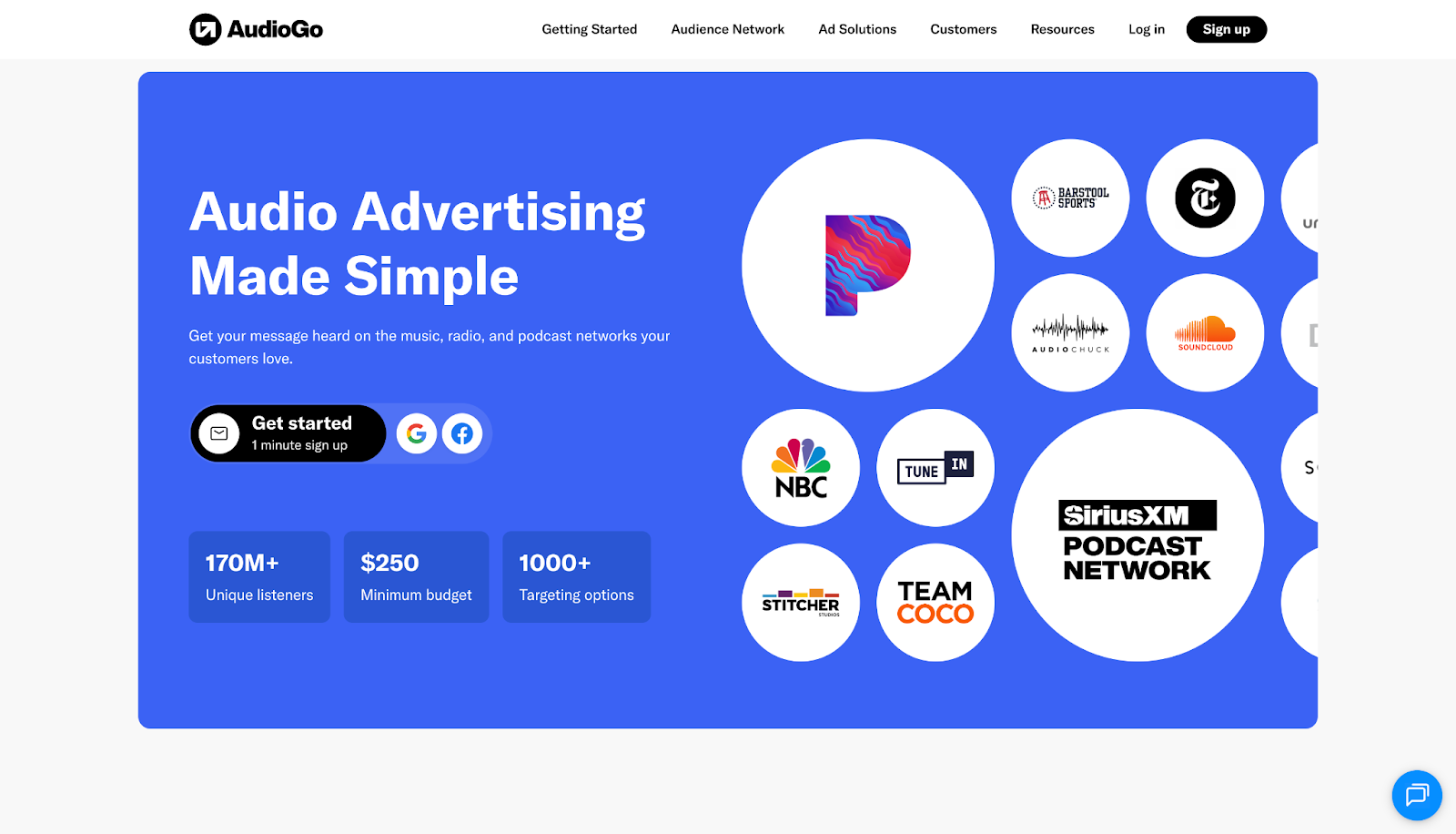
AudioGO is a self-serve platform that lets brands buy audio ads across podcasts and online radio with a relatively low minimum spend (around $250).
Best for:
- SMBs and mid-market brands testing audio and podcast ads programmatically
- Advertisers that want flexible dayparting and interest targeting
Key strengths
- Access to inventory from major partners like iHeartRadio, NBC, and The New York Times.
- Extensive targeting, including up to 221 interests and personas, plus standard demo and geo filters.
- Low-cost creative solutions, using real actors or synthetic voice tools.
Best For: Quick campaign setup with premium network access
AudioGO simplifies podcast advertising by providing a self-serve platform with connections to major podcast networks. Partnerships include household names like iHeartRadio, NBC, and The New York Times.
Key Features:
- Minimum budget of just $250
- Partnerships with premium networks (iHeartRadio, NBC, New York Times)
- Self-serve advertising platform
- Flexible scheduling (any hour, any day)
- Quick campaign creation and launch
- Real-time performance tracking
Why It Stands Out: AudioGO's low barrier to entry combined with access to premium networks makes podcast advertising accessible to smaller businesses while still delivering quality placements.
Ideal For: Small to medium-sized businesses seeking affordable entry into podcast advertising with reputable network access.
10. Gumball - Best for speedy podcast ad deployment
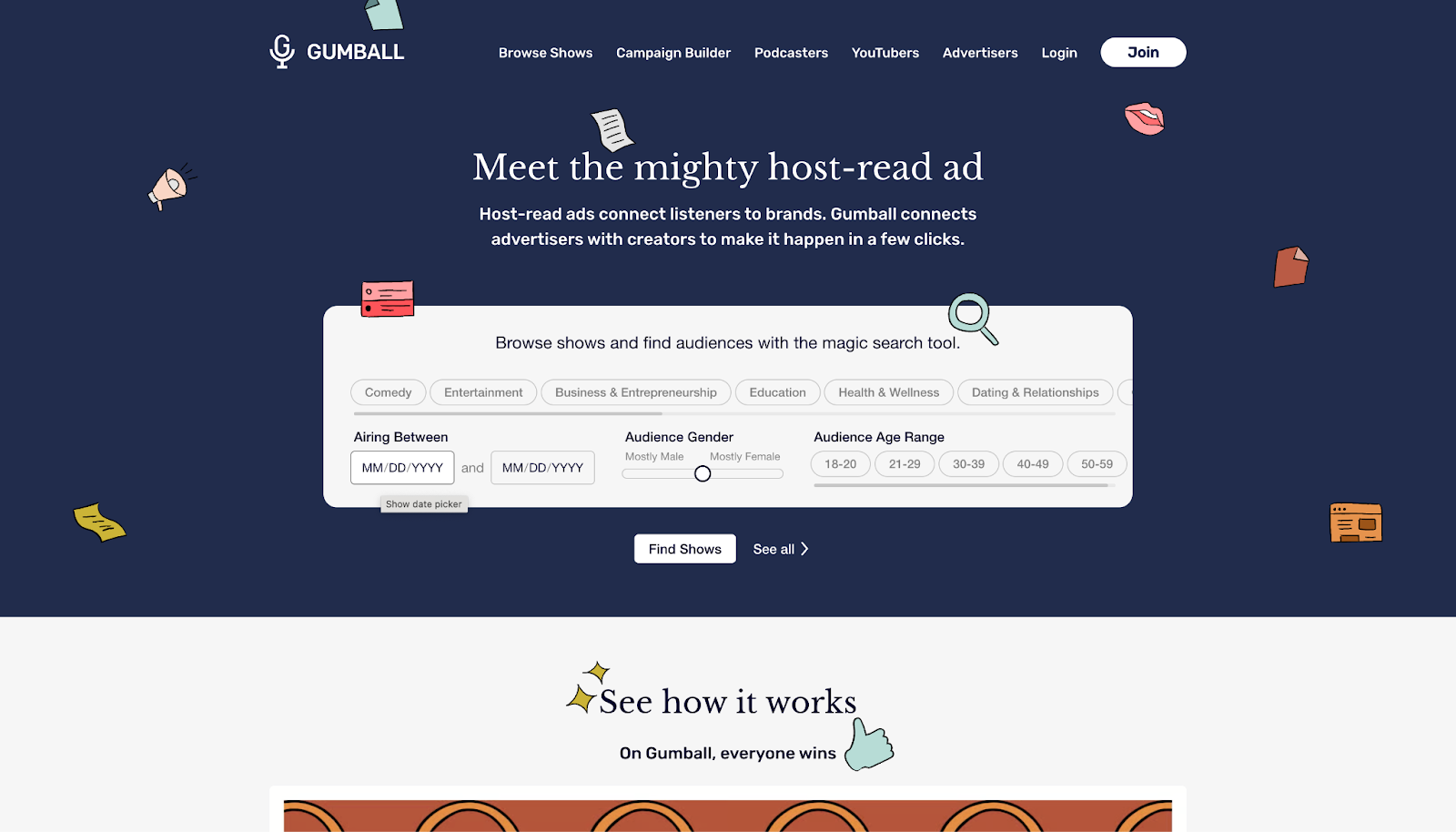
Best For: Direct access to premium host-read advertisements
Gumball operates as a marketplace connecting advertisers directly with podcasters, streamlining the booking process for authentic host-read ads. The platform eliminates intermediaries, allowing for more transparent and efficient ad placements.
Key Features:
- Direct-to-host advertising relationships
- Transparent pricing with no hidden fees
- Host-read ad specialization
- Simplified booking process
- Wide variety of podcast genres
- Flexible campaign management
Why It Stands Out: Gumball's direct marketplace model ensures brands can secure genuine host endorsements without layers of negotiation. The platform's transparent approach appeals to advertisers who value authenticity and straightforward pricing.
Ideal For: Brands seeking authentic host endorsements with direct control over podcast selection and messaging.
11. Full-service podcast ad agencies – Best for brands that want a partner
If you’d rather not manage the complexity of show selection, negotiation, and optimization, specialist agencies can be a great fit. CoHost’s 2025 guide highlights several such agencies, including Ad Results Media, ADOPTER Media, and Direct Results, which collectively have placed tens of thousands of podcast ads and billions of dollars in media.
Best for:
- Established brands with serious podcast budgets
- Advertisers that want strategic guidance and deep industry relationships
- Performance-oriented marketers who need heavy attribution infrastructure
What they typically offer
- Media planning and show vetting
- Creative development and host-read scripting
- Ongoing optimization, rate negotiation, and flighting
- Unified reporting and attribution across multiple networks and platforms
5. Podcast Ad Formats & 2026 CPM Benchmarks
Common podcast ad formats:
- Pre-roll – at the beginning of the show; good for awareness.
- Mid-roll – in the middle; highest engagement and CPM, often best performance.
- Post-roll – at the end; cheaper but lower overall reach.
You’ll see two main delivery types:
- Host-read (baked-in or dynamically inserted) – read by the host in their own voice.
- Announcer-read / produced – traditional “radio-style” ads.
Typical CPM ranges (will vary by vertical & show):
- Host-read mid-roll on branded shows: often higher CPM but stronger performance.
- Programmatic or marketplace buys: lower CPM, more scale, less intimacy.
Industry reports show podcast ad revenue has exceeded $2B globally and continues to grow as advertisers shift budgets from traditional radio to digital audio.
6. Best Practices for Profitable Podcast Ad Campaigns in 2026
Whether you’re using SpotsNow or any other platform on this list, these practices will help you win:
1. Start narrow, then scale
- Begin with 5–15 shows that tightly match your ICP.
- Use SpotsNow or similar platforms to A/B test placements and creatives.
- Gradually expand into look-alike shows and networks once you find winners.
2. Prioritize host-read ads where possible
Host-read ads still outperform generic produced spots because they leverage trust and parasocial relationships. Use the host’s style and language, not your internal jargon.
3. Use clear, trackable CTAs
- Custom landing pages or URLs
- Unique promo codes and vanity URLs per show
- UTM parameters and pixels where supported
This feeds the attribution engines on platforms like SpotsNow and makes it easier to optimize.
4. Think full-funnel, not just last-click
Podcast ads drive brand lift, search volume, and direct traffic that doesn’t always show up via last-click. Look at:
- Branded search trends
- Direct type-in traffic
- “How did you hear about us?” survey responses
5. Refresh creative regularly
Even the best performing ads fatigue. In 2026, plan to:
- Rotate scripts every 4–8 weeks
- Test multiple hooks and offers
- Adjust messaging for new features, seasons, or promos
To maximize your podcast advertising investment, follow these proven strategies:
Embrace Host-Read Authenticity: Listeners respond better to ads that feel natural within the podcast content. Work with hosts to craft messages that align with their voice and resonate with their audience.
Test and Optimize: Start with smaller campaigns to identify what resonates with podcast audiences before scaling investment. Use platform analytics to refine targeting and messaging.
Consider Video Elements: With video podcasts gaining traction, explore opportunities to incorporate visual elements into your campaigns. Video ads on platforms like Spotify and YouTube can enhance engagement.
Leverage Programmatic When Appropriate: While host-read ads excel at building trust, programmatic advertising offers scale and efficiency for broader awareness campaigns.
Track Beyond Downloads: Focus on metrics that matter for your business objectives, whether that's website visits, promo code usage, or direct conversions. Many platforms now offer pixel tracking and attribution modeling.
7. FAQs About Podcast Advertising Platforms in 2026
Are podcast ads still worth it in 2026?
Yes. Listener growth remains strong and studies continue to show above-average ad recall and purchase intent versus traditional display ads.
How much should I budget to “test” podcast advertising?
- Self-serve pilots: $2,000–$10,000 spread over 1–2 months
- Agency-led or premium-network pilots: $25,000+
What matters more than the exact number is how many meaningful tests (shows, creatives, offers) that budget can support.
Which platform is best for a B2B brand?
For B2B:
- Use SpotsNow as your central optimization platform to track pipeline and revenue.
- Supplement with Acast, Spotify, or B2B-focused agencies to reach niche shows with your ICP.
What’s the main benefit of using SpotsNow over buying directly from networks?
SpotsNow gives you:
- A single control center to manage and optimize campaigns across multiple shows and networks.
- Advanced attribution and automated optimization, so budget flows to the placements that actually drive business outcomes.
- The flexibility to mix host-read, dynamic, audio, and video inventory without juggling separate tools.
8. The Future of Podcast Advertising
As we move through 2026, several trends are shaping the podcast advertising landscape:
AI-Powered Optimization: Artificial intelligence is enhancing targeting accuracy and personalization. Platforms are using AI to match advertisers with ideal podcasts and optimize campaign performance in real-time.
Video Integration: The continued growth of video podcasts on platforms like YouTube and Spotify is creating new creative opportunities while maintaining the intimate nature of audio content.
Advanced Measurement: Improved attribution technology is addressing previous measurement challenges, making podcast advertising more accountable and ROI-transparent.
Subscription and Premium Models: While ad-supported podcasts remain dominant, subscription models and premium content are diversifying monetization approaches, potentially affecting ad inventory availability.
Cross-Platform Campaigns: Successful advertisers are integrating podcast ads with broader omnichannel strategies, using consistent messaging across audio, video, and display formats.
9. Conclusion
Podcast advertising in 2026 offers tremendous opportunities for brands willing to invest in this engaged, loyal, and valuable audience. The platforms highlighted in this guide represent the leading options for reaching podcast listeners effectively, whether you're a small business testing the waters or a major brand executing large-scale campaigns.
The key to success lies in choosing platforms aligned with your specific objectives, creating authentic ad content that resonates with listeners, and continuously measuring and optimizing performance. With podcast listenership continuing to grow and advertising technology becoming more sophisticated, now is an excellent time to incorporate podcast advertising into your marketing mix.
Start by identifying your target audience, determining your budget, and selecting one or two platforms that align with your goals. As you gain experience and see results, you can expand your podcast advertising strategy across multiple platforms to maximize reach and impact.
Remember that podcast advertising is about building relationships with listeners through the trusted voices of hosts they love. When done right, it's one of the most effective ways to connect with audiences in an increasingly fragmented media landscape.
Get on the last minute spots email list.
Find incredible discounts and opportunities on premium shows.
Get on the last minute spots email list.
Find incredible discounts and opportunities on premium shows.