

How to advertise on The Telepathy Tapes: what it costs, who buys, and how to book

Keshav Bagaade
Podcast Advertising Data Lead
The Telepathy Tapes sells its host-read inventory direct, quoted per campaign rather than off a public rate card, and steered by the show's representation at United Talent Agency. Spotsnow attributes roughly 99 percent of the show's ads to direct response, and its top spender has run roughly 14 to 16 ads in the tracking window. That mix, a viral consciousness podcast running coded, attributable reads at scale, is the whole reason a performance buyer should look twice. Spotsnow estimates all of this from tracked advertiser activity, not audience surveys.

The show in question is The Telepathy Tapes, the investigative hit on consciousness, telepathy, and nonspeaking autism that topped charts after its late-2024 launch.
Why The Telepathy Tapes is built for host-read direct response
Host Ky Dickens is an award-winning documentary filmmaker and a magna cum laude Vanderbilt graduate who created, directs, and produces the show. It sits in the science category, next to the paranormal and consciousness feeds most brands overlook.
Spotsnow attributes roughly 99 percent of the show's ads to direct response. That matters because the format runs on codes, vanity URLs, and post-checkout attribution, the machinery that lets a brand tie a sale back to the read. Spotsnow estimates reach at roughly 180,000 listeners per episode, an estimate, not an audited count. The audience skews female and lands mostly in the younger-to-mid-adult range, at middle to upper-middle incomes, and is heavily concentrated in the US.
Where a CPM argument usually sits, put a format argument instead. This is a slow-burn investigative narrative. Listeners lean in for a full episode, and the ad break rides that same attention rather than fighting it. A host-read borrows the trust Dickens built as a documentary filmmaker, which is exactly why an endorsement lands harder here than a produced spot would.
On influence, the show carries roughly 94,000 Instagram followers behind the host handle. The pull is concentrated in the feed and on Instagram rather than spread thin across a dozen platforms, which is often what a direct-response buyer wants: a captive audience that acts, not a scattered one.
Who is advertising on The Telepathy Tapes
The roster leans DTC wellness and affordable-luxury retail, with a few mass advertisers layered in. Spotsnow tracked roughly 75 to 87 brands over the recent window. Recognizable names include Quince, Progressive, Shopify, BiOptimizers, and Ka'Chava.
The anchor advertisers, broken down
Quince

Quince sells affordable-luxury essentials, cashmere, silk, and home goods, direct to consumer. Spotsnow data shows roughly 14 to 16 ads on the show, all host-read, with estimated total spend over $90K. Spotsnow classifies the buy as direct response. A female-skewing, middle-to-upper-income audience that values quality without the markup is Quince's core shopper, which is why the read repeats.
BiOptimizers
BiOptimizers sells research-backed supplements built around digestion, magnesium, and stress. Spotsnow data shows roughly 9 to 11 ads, all host-read, with estimated total spend over $70K. Spotsnow attributes it as direct response. A listener open to alternative science and self-optimization is already primed for a supplement pitch, so the fit is close to native.
Progressive Insurance
Progressive is the US auto and home insurer behind Flo. Spotsnow data shows roughly 23 to 27 ads, mostly produced announcer spots rather than host endorsements, with estimated total spend over $30K. Insurance is a mass-reach category with a wide funnel, so a big US audience is enough to justify the buy even without a coded read.
The outlier worth noting
Progressive is also the counterexample on this feed. It runs produced spots against a direct-response roster and buys the show for reach and association rather than an attributable click. Proof that a brand-awareness objective can share the same inventory as the DTC core.
| Brand | Est. total spend | Direct response | Time of spend (last 1 year) |
|---|---|---|---|
| Quince | over $90K | Yes, all host-read | Through Aug 2026 |
| BiOptimizers | over $70K | Yes, all host-read | Through Aug 2026 |
| Progressive Insurance | over $30K | Mixed, mostly produced | Through Aug 2026 |
All spend figures are Spotsnow estimates.
Why science and wellness brands cluster here
The through line is a curious, open audience that already treats health and self-improvement as identity, not chore. Dickens spent a career making people trust a documentary voice, and that authority transfers to whatever she reads. Pair that with a listener who leans female, sits at a comfortable income, and is willing to try the new supplement or the new cashmere brand, and you get the roster Spotsnow tracks: Quince, BiOptimizers, Ka'Chava, OneSkin, Ruggable. These are brands that live or die on attributable conversion, and they keep coming back, which is the only vote that counts.
How your ad could sound
A real host-read from OneSkin shows the template. The read starts at the ad break in this episode.
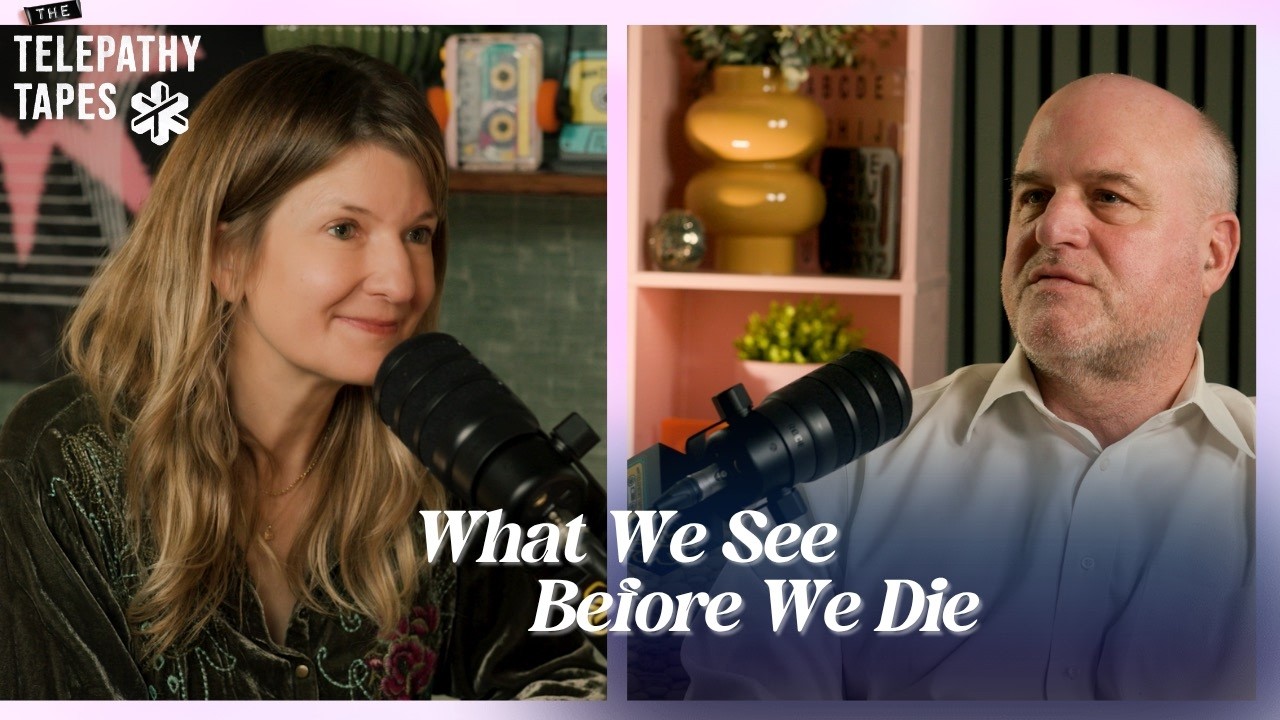
OneSkin host-read on The Telepathy Tapes
What works: the personal hook is honest and specific, "Skincare is one of those things where I don't want a huge complicated process. I want something that works". The offer is clean, "15% off using code tapes at onskin.co/tapes", and the handoff makes attribution part of the story: "they'll ask where you heard about them. Please support our show and let them know we sent you." That closes the loop for a DR buyer.
Worth improving: the science stacks up fast, "free from over 1,500 harsh or irritating ingredients" plus the OS1 peptide, and it risks burying the offer. There's also no real urgency beyond "for a limited time." Tighten to one benefit and get to the code sooner. A strong host-read leads with the personal reason, states the code twice, and gives one clear reason to act now.
View what a great sample ad looks like here.
What makes a show like this convert
- The format carries attention through the break. A slow investigative narrative keeps listeners present, so a coded read gets heard instead of skipped.
- Host credibility does the selling. Dickens's documentary authority is what an endorsement borrows, and it reads as a recommendation, not an ad.
- The audience is primed to buy. A female-skewing, comfortable-income, US-heavy audience that's open to wellness and new brands matches the DTC roster point for point.
- Repeat buying proves the math. Quince alone has run roughly 14 to 16 host-reads; brands don't renew that often unless the codes are cashing.
The Telepathy Tapes in a nutshell
Listeners are curious, female-leaning, comfortable-income, and mostly in the US, drawn to consciousness, wellness, and alternative science. DTC brands like Quince and BiOptimizers already run coded host-reads here, while a mass advertiser like Progressive buys produced spots for reach. The show sells direct, quoted per campaign through its UTA representation, not off a shelf. With Spotsnow putting nearly all activity in the direct-response column, it fits a performance buyer more than a pure awareness play.
Frequently asked questions
The Telepathy Tapes is sold on a quoted basis rather than a public rate card. Four things move the number: placement (mid-roll host-read prices above pre-roll and post-roll), read type (a host endorsement prices above a produced spot), commitment length (multi-episode flights and category exclusivity price better than a single test), and how close you are to the air date. For market context, a host-read spot on a typical show costs a brand roughly $20 to $30 for every thousand listeners it reaches. In-demand shows clear well above that. The more useful signal for this show is who already buys: Quince has run roughly 14 to 16 ads, alongside BiOptimizers and Progressive Insurance. Repeat buying at that level tells you more about where a show prices, and what it's worth to the brands buying it, than an outside estimate can.
Ads run on most episodes, so the show is in demand and inventory moves fast. Plan on reaching out sooner than you think you need to.
Plan on about 1 week to book, 2 to 3 weeks to produce and run, plus 2 to 3 weeks of lead time, so roughly 5 to 7 weeks end to end.
The Telepathy Tapes is sold direct rather than through one of the large networks. You can approach the host's representation, United Talent Agency, or book through a platform that already has the show in its inventory. You can view different advertising platforms here.
The evidence points that way. Spotsnow attributes roughly 99 percent of the show's ads to direct response, and DTC wellness names like BiOptimizers, Ka'Chava, and OneSkin run coded host-reads here on repeat. That repeat pattern, not any single spot, is the strongest signal that the codes are cashing.
The Telepathy Tapes isn't the only feed reaching this audience. Spotsnow shows which science podcasts have host-read spots open right now, and which brands already buy them.
Get on the last minute spots email list.
Find incredible discounts and opportunities on premium shows.
Get on the last minute spots email list.
Find incredible discounts and opportunities on premium shows.