

How to advertise on Spot On with Link Lauren: what it costs, who buys, and how to book

Keshav Bagaade
Podcast Advertising Data Lead
Spot On with Link Lauren sells its host-read inventory direct, quoted per campaign rather than off a public rate card. Nearly all of that activity is direct-response: Spotsnow estimates roughly 98% of the ads on this feed carry a code or a URL built for attribution. The top spender, Lean, has run roughly 14 to 17 host-read ads here, an estimated over $50K in total spend. For a buyer, that mix reads as a proven direct-response feed, not a brand-awareness experiment. Spotsnow estimates all of this from tracked advertiser activity, not audience surveys.

The show in question is Spot On with Link Lauren, a weekly commentary feed on politics, culture, and celebrity news.
Why Spot On with Link Lauren is built for host-read direct response
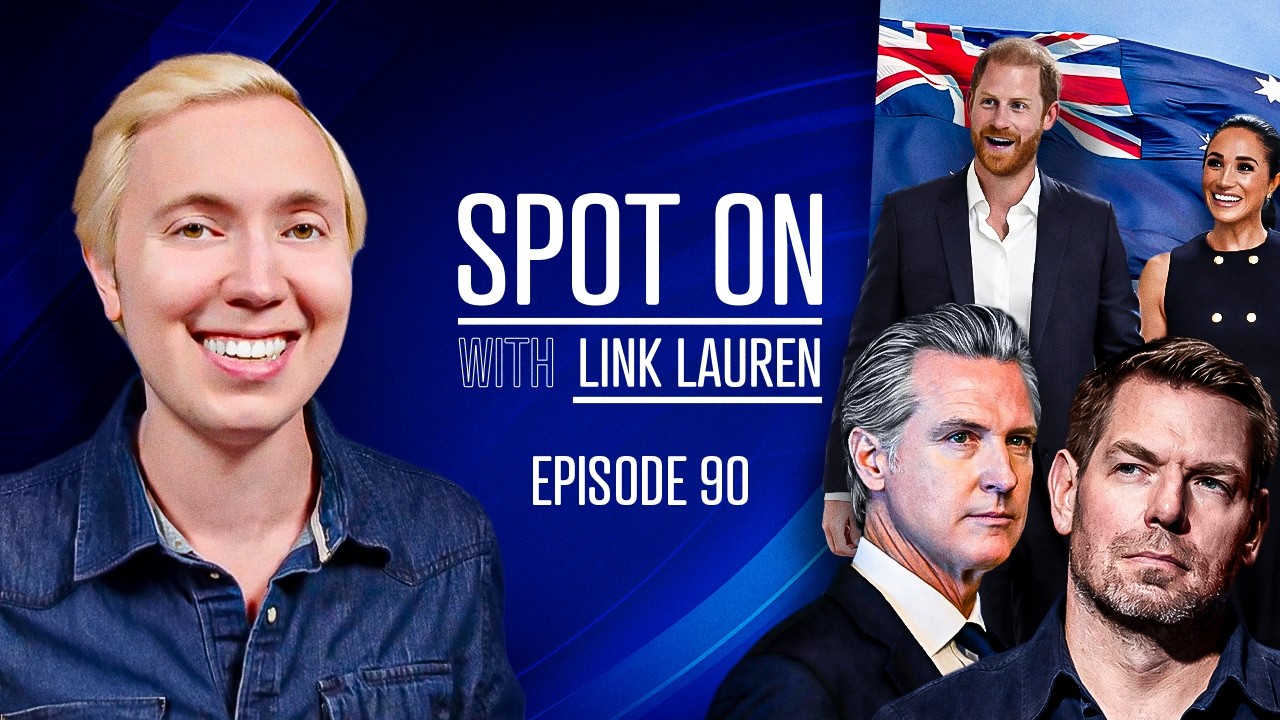
Link Lauren hosts the show, a conservative political and pop-culture commentator who has toured as a guest on Megyn Kelly's live stage show. The show sits in the health, wellness & fitness advertiser lane as much as it sits in society and culture, because that's where its biggest buyers come from.
Spotsnow data shows the ad activity here is almost entirely direct-response, close to 98%. That format matters because it's built to be measured: promo codes, vanity URLs, and offers a brand can trace back to a specific read. Spotsnow estimates the show reaches roughly 100,000 listeners per episode, an estimate rather than an audited count.
Where a rate argument would normally go, look at the format instead. Link Lauren's delivery is direct and opinionated, the kind of sustained voice that carries a listener through the ad break rather than losing them at it. That's the attention a host-read borrows. When she pivots from a Meghan Markle segment into a supplement pitch, the audience stays in the room, and a coded offer only converts if people are still listening when the code lands.
On engagement, Apple listeners rate the show 4.8 stars across an estimated 1,730 to 2,020 ratings, and the YouTube channel carries about 235,000 subscribers. Its pull is concentrated in the feed and on video, where the host reads directly to camera, which is exactly the environment a code-driven read wants.
Who is advertising on Spot On with Link Lauren
The roster runs blue-chip: national insurance, retail, and auto names alongside a tight cluster of DTC wellness and SaaS buyers. Recognizable names on the feed include USAA, Shopify, Nordstrom, Toyota, and Progressive.
The anchor advertisers, broken down
Lean
Lean is a weight-loss supplement from Brick House Nutrition, sold direct to consumers with a promo code. Spotsnow data shows it has run roughly 14 to 17 host-read ads on this feed, an estimated over $50K in total spend, and Spotsnow classifies it as direct-response. It fits because the audience skews middle-aged and health-curious, the exact buyer a coded weight-loss offer is written for.
Cowboy Colostrum

Cowboy Colostrum sells premium bovine colostrum supplements direct to consumers. Spotsnow data shows roughly 13 to 15 host-read ads here and an estimated over $40K in total spend, classified as direct-response. A wellness brand chasing a US, comfortable-income audience that trusts the host's word is the natural buyer for this kind of read.
Shopify
Shopify is the e-commerce platform that lets merchants build and run online stores. Spotsnow data shows a handful of host-read ads on this feed and an estimated over $10K in total spend, classified as direct-response. It runs here because the same self-starter, entrepreneur-minded listener who buys a DTC supplement is often the one starting a store.
McDonald's, the awareness outlier
McDonald's carries the biggest raw presence on the feed, but entirely as produced network spots rather than host-reads. That's proof a pure brand-awareness objective can ride this audience too, without a code attached. Different goal, same room.
| Brand | Est. total spend | Direct-response | Time of spend (last 1 year) |
|---|---|---|---|
| Lean | over $50K | Direct-response | Active across the year, ramping through spring and summer |
| Cowboy Colostrum | over $40K | Direct-response | Active, steady through the year |
| Shopify | over $10K | Direct-response | Active, tapering mid-year |
All spend figures are Spotsnow estimates.
Why health, wellness & fitness brands cluster here
Look at who repeats. Lean and Cowboy Colostrum both come back, and neither is buying reach for its own sake. They're buying a host who will say the offer in her own voice to a middle-aged, mostly US audience that skews slightly female and sits in a comfortable middle to upper-middle income band. That listener trusts an opinionated commentator more than a produced jingle, which is why a supplement read here converts on a code where a banner ad wouldn't move. The show's authority is the product being sold to advertisers: the audience already treats Link Lauren as a filter for what's worth their attention, so when she endorses a product, the recommendation inherits that trust. Wellness DTC lives or dies on that handoff, and this feed keeps giving it back the same buyers.
How your ad could sound
Lean read on Spot On with Link Lauren
The Lean read is a clinic in problem-first framing. It opens on a trend the audience already knows: "Everybody is talking about weight loss injections because the results are so dramatic." Then it qualifies hard, filtering out the wrong buyer with a line that Lean "is not for the casual" dieter but for "frustrated dieters with 10 or more pounds to lose." That's smart. It repels tire-kickers and speaks straight to the buyer who converts. The offer is clean too: "20% off and free rush shipping," one code, no clutter.
Two things worth fixing. The code and domain get rushed at the close, and the URL garbles in the read itself, which muddies attribution when a listener tries to type it. And the call to action carries no urgency, no deadline, no scarcity, so there's nothing pushing the click today instead of next week. A dated offer or a limited run would tighten the conversion window without touching the rest of the script.
View what a great sample ad looks like here.
What makes a show like this convert
- The format does the work. Nearly all activity here is direct-response, so the read is built to be measured with a code or URL, not just heard.
- The host carries credibility. Link Lauren's direct, opinionated delivery earns the trust a recommendation needs, backed by a 4.8-star Apple rating.
- The audience is a fit. An estimated 100,000 listeners, mostly US, middle-aged, and comfortable on income, is the exact profile wellness DTC targets.
- Buyers come back. Lean's 14 to 17 host-reads and Cowboy Colostrum's 13 to 15 tell you the math worked the first time and kept working.
Spot On with Link Lauren in a nutshell
An estimated 100,000 listeners, mostly US, skewing slightly female and middle-aged, with a comfortable middle to upper-middle income base. The buyers who already run here are wellness DTC names like Lean and Cowboy Colostrum plus a platform like Shopify, almost all on coded host-reads. The show is sold direct and quoted per campaign, through the host's representation rather than a large network. Bottom line: this is a direct-response feed first, well suited to a brand that wants to track a code, with room for an awareness buy on produced spots if that's the goal.
Frequently asked questions
Spot On with Link Lauren is sold on a quoted basis rather than a public rate card. Four things move the number: placement (mid-roll host-read prices above pre-roll and post-roll), read type (a host endorsement prices above a produced spot), commitment length (multi-episode flights and category exclusivity price better than a single test), and how close you are to the air date. For market context, a host-read spot on a typical show costs a brand roughly $20 to $30 for every thousand listeners it reaches. In-demand shows clear well above that. The more useful signal for this show is who already buys: Lean has run roughly 14 to 17 host-read ads, alongside Cowboy Colostrum and Shopify. Repeat buying at that level tells you more about where a show prices, and what it's worth to the brands buying it, than an outside estimate can.
Ads run on most episodes, so the show is in demand and inventory moves fast. Plan on reaching out sooner than you think you need to.
Plan on about 1 week to book, 2 to 3 weeks to produce and run, plus 2 to 3 weeks of lead time, so roughly 5 to 7 weeks end to end.
Spot On with Link Lauren is sold direct rather than through one of the large networks. You can approach the host's representation, Devil May Care Media, or book through a platform that already has the show in its inventory. You can view different advertising platforms here.
The repeat buying says yes. Lean and Cowboy Colostrum have each run more than a dozen host-reads on this feed, and Spotsnow classifies both as direct-response. Brands don't re-up a coded read that isn't paying back. If you're a wellness or DTC brand weighing a buy, that history is the closest thing to a track record you'll get before your own test.
Spot On with Link Lauren isn't the only feed reaching this audience. Spotsnow shows which society & culture podcasts have host-read spots open right now, and which brands already buy them.
Get on the last minute spots email list.
Find incredible discounts and opportunities on premium shows.
Get on the last minute spots email list.
Find incredible discounts and opportunities on premium shows.